Solar Panel Roof Requirements 2025: Helena & Montana Guide
Contact Us
Solar Panel Roof Requirements 2025: Helena & Montana Guide
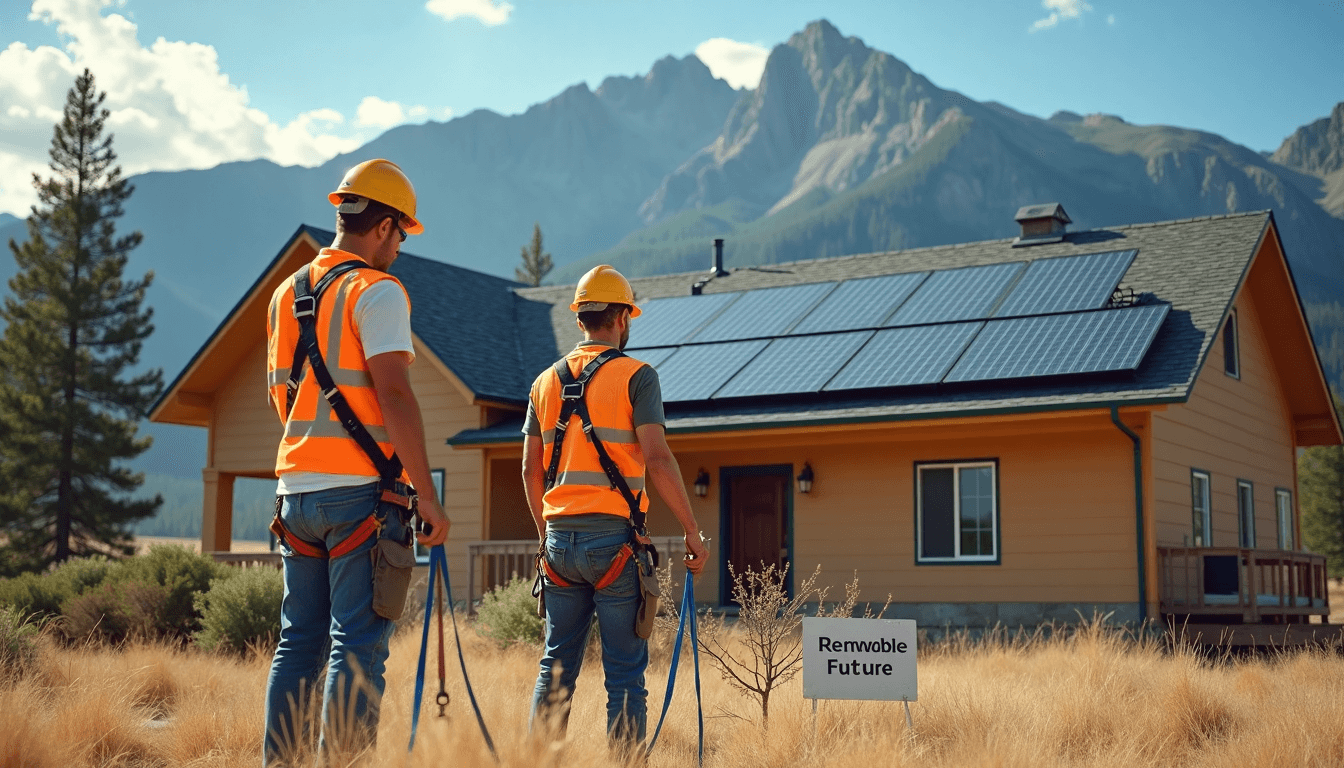
Thinking about adding solar panels to your Helena or Montana home for 2025? Here’s something most people overlook. Montana requires a 10-year property tax exemption for renewable energy systems, meaning you could save thousands right from the start. But while the savings are real, the real story is in the crucial roof and permit requirements hiding in plain sight. Many excited homeowners rush the process and end up facing expensive surprises. Here is what most guides miss about going solar in Montana.
Table of Contents
Quick Summary
| Takeaway | Explanation |
|---|---|
| Structural Integrity is Crucial | Roofs must meet load capacity requirements to support solar systems, necessitating professional assessments for age, material, and condition before installation. |
| Optimal Roof Orientation Matters | South-facing roofs with a 15-40 degree slope enhance solar performance, while considerations for Montana’s severe weather must be addressed in the mounting system design. |
| Understand Building Codes and Permits | Homeowners must navigate electrical permit requirements and energy code compliance to ensure legal and efficient solar panel installation in Montana. |
| Choose the Right Roofing Materials | Asphalt shingles are suitable for solar installations, but advanced materials like metal and clay tiles can enhance performance. Assessments should consider Montana’s climate challenges. |
| Proactive Maintenance and Risk Management | Regular inspections and detailed documentation are essential for insurance coverage and risk mitigation, particularly in addressing potential fire safety and environmental challenges. |
Structural Needs for Solar Panel Installation
Installing solar panels requires more than just enthusiasm. Your roof must meet specific structural requirements to safely support a solar energy system. Homeowners in Helena and across Montana need to carefully evaluate their roof’s capacity before moving forward with solar panel installation.
Roof Load Capacity and Structural Integrity
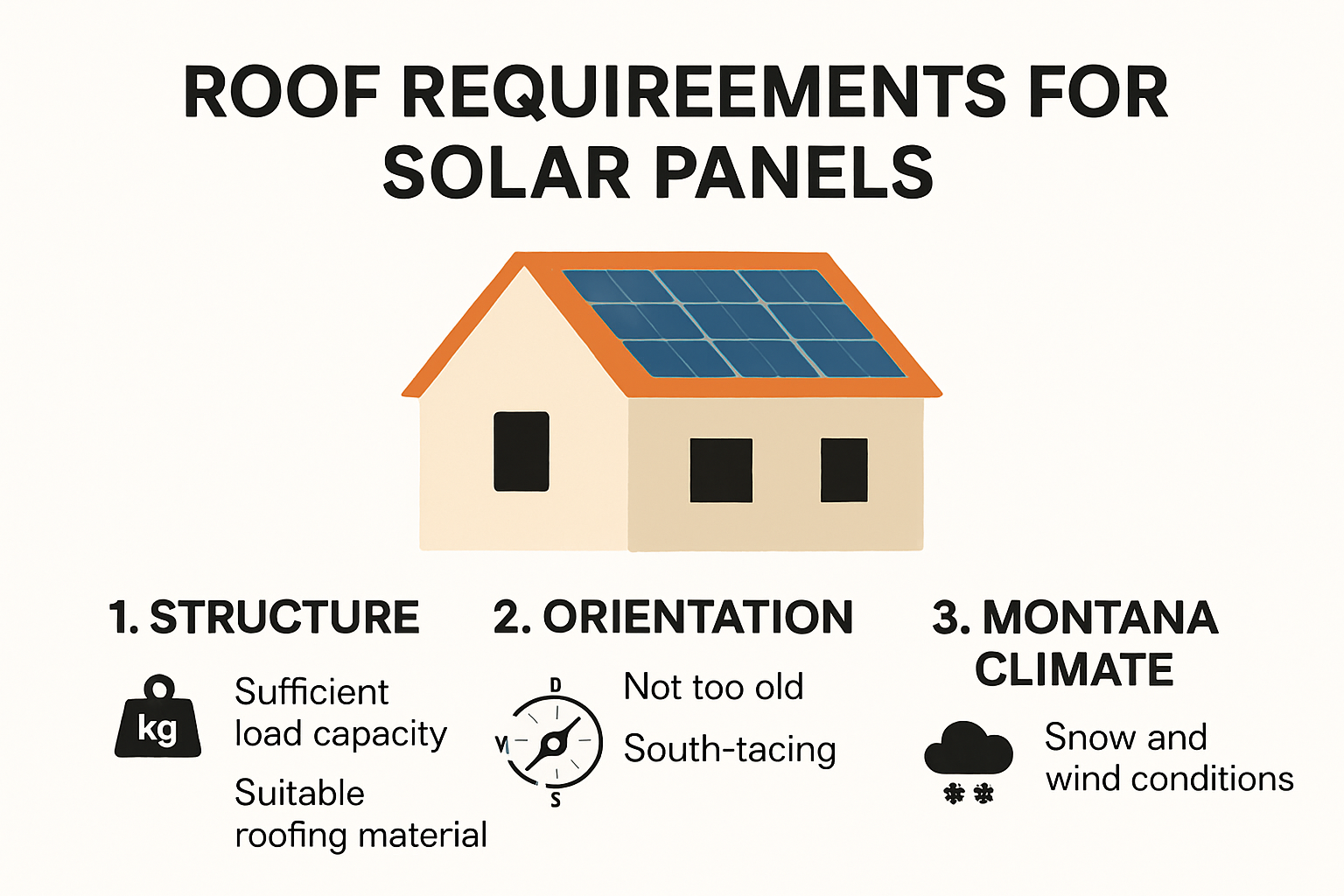
The foundation of successful solar panel installation starts with understanding your roof’s structural capabilities. According to the International Building Code (IBC), roofs supporting photovoltaic systems must be designed to accommodate both additional dead loads and existing live load requirements. This means your roof must handle the weight of solar panels without compromising its structural integrity.
The American Society of Civil Engineers (ASCE) provides specific guidelines for solar panel installations. Their ASCE 7-16 standard specifies that solar panel weight and support structures should be considered as dead loads. Interestingly, roof live loads may not need to be applied to areas covered by solar panels if the clear space between panels and the roof surface is 24 inches or less.
Professional roof assessments are crucial. Experienced contractors will evaluate several key factors:
- Roof Age : Older roofs might require reinforcement or replacement before solar installation
- Material Composition : Some roofing materials better support solar panel weight
- Existing Structural Condition : Signs of sagging, water damage, or structural weakness
Roof Orientation and Solar Performance
The U.S. Department of Energy recommends specific roof characteristics for optimal solar panel performance. South-facing roofs with a slope between 15 and 40 degrees provide the most efficient solar energy generation. This orientation maximizes sunlight exposure and increases overall system productivity.
Montana’s unique climate presents additional challenges. Roofs must withstand significant snow loads, temperature fluctuations, and potential wind stress. Solar panel mounting systems must be engineered to distribute weight evenly and provide robust wind resistance. Professional installers will use specialized mounting hardware designed to secure panels without compromising roof integrity.
Professional Assessment and Compliance
Before installing solar panels, homeowners should invest in a comprehensive roof evaluation. This assessment typically involves:
- Structural engineering analysis
- Load-bearing capacity calculations
- Roof material compatibility assessment
- Identification of potential reinforcement needs
Local building codes in Helena and Montana may have additional requirements for solar panel installations. Working with certified roofing and solar professionals ensures your installation meets all structural and safety standards. These experts can provide detailed recommendations specific to your property’s unique characteristics.
Remember, a successful solar panel installation begins with a solid, well-prepared roof. By prioritizing structural integrity and professional guidance, Helena homeowners can transform their roofs into efficient, reliable renewable energy platforms.
Roof Types and Materials Suitable for Solar

Choosing the right roof type and material is critical for successful solar panel installation in Helena and Montana. Not all roofing surfaces are created equal when it comes to supporting solar technology. Understanding the nuanced characteristics of different roofing materials can significantly impact solar system performance and longevity.
Asphalt Shingle Roofs: The Standard Performer
Asphalt shingle roofs remain the most common roofing material in Montana and offer excellent compatibility with solar panel installations. National Renewable Energy Laboratory (NREL) research indicates that standard asphalt shingles provide a robust and cost-effective foundation for solar systems. These roofs typically have a 20-30 year lifespan that aligns well with solar panel installation timelines.
Most solar mounting systems can be seamlessly integrated with asphalt shingle roofs using specialized mounting hardware that minimizes roof penetration. Professional installers use techniques that maintain the roof’s water-resistant properties while securely anchoring solar panels. Homeowners should ensure their asphalt roof is in good condition and relatively new before solar installation.
Advanced Roofing Materials for Solar Optimization
Certain roofing materials offer unique advantages for solar performance. Cutting-edge research from the United Arab Emirates University reveals fascinating insights into roof material performance:
-
Metal Roofs : Coated metal roofs with reflective pigments like titanium dioxide can improve photovoltaic performance by up to 10.4%. These roofs provide excellent durability and thermal characteristics.
-
Clay Tile Roofs : Surprisingly versatile, clay tiles can reduce module temperatures by 2.6°C compared to metal roofs. This temperature reduction can increase solar panel output voltage by 0.378V per module.
-
Green Roofs : Innovative green roof technologies can reduce photovoltaic module temperatures by 1.5-3°C, potentially enhancing power output efficiency by up to 6%.
Montana-Specific Roofing Considerations
Montana’s extreme weather conditions demand specialized solar installation approaches. Roofing materials must withstand significant temperature variations, heavy snow loads, and potential hail impacts. The Montana State University Extension recommends prioritizing roofing materials with:
- High wind resistance ratings
- Superior thermal insulation properties
- Minimal thermal expansion and contraction
- Proven durability in alpine and semi-arid climates
Metal roofing and high-quality architectural shingles often perform best in Montana’s challenging environmental conditions. These materials provide the structural integrity needed to support solar panel systems while maintaining long-term roof performance.
Before solar panel installation, Helena homeowners should conduct a comprehensive roof assessment. Consulting with professional roofing specialists who understand both local climate challenges and solar technology will ensure optimal system design and performance. The right roof material can transform your solar investment from a simple energy solution into a highly efficient, long-lasting renewable energy platform.
To help compare different roofing materials mentioned for solar panel installations, refer to the table below summarizing their key characteristics, benefits, and solar compatibility.
| Roofing Material | Typical Lifespan | Solar Performance Benefits | Notable Considerations |
|---|---|---|---|
| Asphalt Shingles | 20-30 years | Cost-effective, widely compatible with solar mounting systems | Must be in good/new condition |
| Metal (Coated) | 30-50+ years | Up to 10.4% PV performance boost with coatings; durable, good thermal control | Higher upfront cost; suitable for Montana |
| Clay Tile | 40-50+ years | Reduces module temps by 2.6°C; can increase output voltage per module | Roofing can be fragile; needs professional install |
| Green Roof | Varies (depends on vegetation and system) | Can lower module temps 1.5-3°C; up to 6% power output gain | Complex installation and maintenance |
Building Codes and Permits in Montana
Navigating the complex landscape of building codes and permits is crucial for successful solar panel installation in Montana. Homeowners and contractors must understand the intricate regulatory framework that governs renewable energy systems to ensure legal compliance and optimal system performance.
Electrical Permit Requirements
Montana has specific regulations for solar photovoltaic (PV) system installations. According to the Montana Department of Labor and Industry, electrical permits are mandatory for residential solar installations. Licensed electrical contractors must submit detailed permit applications specifying the dwelling type and service amperage.
Homeowners have two primary pathways for installation:
- Professional Installation : Licensed electrical contractors apply for and manage the entire permit process
- Homeowner Permits : Individuals can obtain a homeowner electrical permit, though grid-tied systems require a licensed electrical contractor to complete the wiring
The permit process ensures that solar installations meet critical safety and technical standards. Inspectors verify electrical connections, system design, and compliance with local and state building codes.
Energy Code Compliance
The Montana Department of Environmental Quality (DEQ) has adopted the 2018 International Energy Conservation Code with specific Montana amendments. These regulations establish rigorous efficiency standards for new construction, including requirements for:
- Insulation specifications
- Window and door energy performance
- Ventilation systems
- Air tightness measurements
For solar installations, this means careful consideration of how the system integrates with the building’s overall energy profile. Builders and installers must complete an Energy Code Compliance label, which is placed on the main electrical panel to demonstrate adherence to state standards.
Tax Incentives and Property Considerations
Montana offers compelling incentives to encourage renewable energy adoption. The Renewable Energy Systems Exemption provides a significant property tax benefit for solar installations. This exemption allows homeowners to:
- Receive a 10-year property tax exemption for renewable energy equipment
- Avoid additional property tax increases resulting from solar panel installations
- Potentially increase property value without immediate tax penalties
Local municipalities in Helena and across Montana may have additional zoning regulations and permit requirements. Homeowners should consult with local building departments and professional solar installers to ensure full compliance with all applicable codes.
Understanding these regulatory requirements is more than a legal obligation. It represents a commitment to safety, efficiency, and responsible renewable energy implementation. By carefully navigating Montana’s building codes and permit processes, homeowners can create solar installations that are not just environmentally responsible, but also legally sound and technically robust.
The following table outlines the key permitting and compliance requirements for solar installations in Montana, summarizing who is responsible, key actions, and supporting regulatory references.
| Requirement | Who is Responsible | Key Actions/Details | Reference/Notes |
|---|---|---|---|
| Electrical Permit | Licensed Contractor or Homeowner | Submit application; grid-tied requires licensed contractor wiring | MT Dept. of Labor and Industry |
| Energy Code Compliance | Installer/Builder | Complete compliance label for main panel; follow MT amendments | MT Dept. of Environmental Quality (DEQ) |
| Structural Roof Assessment | Homeowner/Professional Assessor | Evaluate age, material, condition, load capacity | Required for code & insurance/safety |
| Property Tax Exemption Application | Homeowner | File for 10-year exemption post-installation | MT DEQ/Local Assessor |
| Local Zoning/Building Permits | Homeowner/Contractor | Check for any city/county-specific solar rules and obtain permits | Local authorities (Helena, county offices) |
Tips for Insurance and Property Managers
Property managers and insurance professionals in Helena face unique challenges when addressing solar panel installations. Understanding the complex intersection of risk management, structural integrity, and renewable energy technology is crucial for protecting property investments and maintaining comprehensive insurance coverage.
Structural Risk Assessment and Documentation
New York City Building Department guidelines emphasize the critical importance of comprehensive structural integrity assessments before solar panel installation. Property managers must ensure detailed documentation that includes:
- Comprehensive roof load-bearing capacity analysis
- Professional engineering structural reports
- Detailed installation plan with weight distribution specifications
- Pre and post-installation roof condition assessments
These documents serve multiple purposes: they protect property owners from potential structural damage, provide critical information for insurance underwriting, and demonstrate proactive risk management. Insurers increasingly require such documentation to assess potential liability and determine appropriate coverage levels.
Fire Safety and Risk Mitigation
Solar panel installations introduce unique fire safety considerations. Assurance Group risk management experts recommend implementing comprehensive fire prevention strategies:
- Ensuring proper electrical isolation systems
- Installing fire-resistant mounting materials
- Maintaining clear access paths for emergency responders
- Implementing specialized fire suppression techniques for electrical systems
Property managers should collaborate with solar installation professionals to develop emergency response protocols. This includes creating detailed documentation about system components, electrical connections, and potential shutdown procedures for first responders.
Maintenance and Insurance Considerations
Power Corporation maintenance specialists highlight the critical role of routine inspections in managing solar panel systems. Insurance providers increasingly require documented maintenance programs that include:
- Quarterly visual inspections
- Annual comprehensive system performance evaluations
- Detailed maintenance logs
- Immediate reporting of any structural or performance anomalies
Insurance policies for properties with solar installations often have specific requirements. Property managers should:
- Update property insurance policies to include solar equipment
- Verify coverage for potential equipment failure
- Understand potential liability implications
- Maintain comprehensive documentation of system specifications
Additionally, Montana’s unique climate presents specific challenges. Extreme temperature variations, heavy snow loads, and potential hail damage require specialized insurance considerations. Property managers must work closely with insurers who understand the regional environmental risks associated with solar panel installations.
By adopting a proactive approach to risk management, documentation, and maintenance, property managers and insurance professionals can effectively navigate the complexities of solar panel installations. This comprehensive strategy protects property investments, ensures system performance, and provides peace of mind for property owners in Helena and across Montana.
Frequently Asked Questions
What are the structural requirements for solar panel installation on my roof in Montana?
To safely support solar panels, your roof must have adequate load capacity and structural integrity. It’s essential to have a professional assessment to evaluate the roof’s age, material, and condition before installation.
How does roof orientation affect solar panel efficiency in Helena?
South-facing roofs with a slope of 15-40 degrees are ideal for maximizing solar performance. This orientation ensures optimal sunlight exposure, which is crucial for generating energy efficiently.
What types of roofing materials are suitable for solar panel installations in Montana?
Asphalt shingles are standard and widely compatible. However, metal, clay tiles, and green roofs can enhance solar performance due to their specific thermal and structural properties, crucial for Montana’s weather conditions.
Are there any tax incentives for installing solar panels in Montana?
Yes, Montana offers a 10-year property tax exemption for renewable energy systems, allowing homeowners to benefit from significant savings on their property taxes when they install solar panels.
Ready to Make Your Helena Home Solar-Ready the Right Way?
If you are planning to install solar panels in 2025, you already know how important strong structural integrity, load capacity, and local permit compliance are for success. Many Helena homeowners discover that ignoring these details creates costly setbacks. At Ellingson Roofing LLC, we specialize in building solid foundations for solar energy systems that meet all Montana requirements. We work with roofs of every age and material, from asphalt shingles to metal, and help you avoid common mistakes mentioned throughout the Solar Panel Roof Requirements 2025: Helena & Montana Guide.
Take the stress out of the solar process with a team that understands the real challenges of Montana weather, building codes, and tax incentives. Visit Ellingson Roofing LLC Solar Solutions to request your free solar-ready roof assessment. Let us help you secure the tax benefits and dependable performance your home deserves. Connect now and have peace of mind before solar season arrives.
Contact Us
Stay up to date on Montana Roofing, Siding, Gutters, and Solar Energy